


Explore India’s rich design legacy, architectural marvels, and cultural innovation
India is a treasure trove of architectural wonders—not just in monuments and temples, but also in museums and design centers that chronicle the nation’s past, present, and future through space, form, and material. Whether you’re a design student, architect, cultural tourist, or a curious traveler, these destinations provide an immersive experience into India’s design thinking and architectural narratives.
1. Auroville Earth Institute, Tamil Nadu

Located in the experimental township of Auroville, the Auroville Earth Institute (AVEI) is a hub for sustainable architecture. Dedicated to research, development, and dissemination of earth-based building technologies, AVEI promotes eco-friendly construction methods. The institute’s campus itself is a testament to innovative design using compressed stabilized earth blocks, showcasing the potential of sustainable materials in modern architecture.
2. CEPT Archives, Ahmedabad

The Centre for Environmental Planning and Technology (CEPT) Archives in Ahmedabad is a treasure trove for those interested in architectural history. Housing a vast collection of drawings, photographs, and documents, the archives provide insights into India’s architectural evolution. The institution also hosts exhibitions and lectures, fostering a deeper understanding of design principles and urban planning.
3. Le Corbusier Centre, Chandigarh
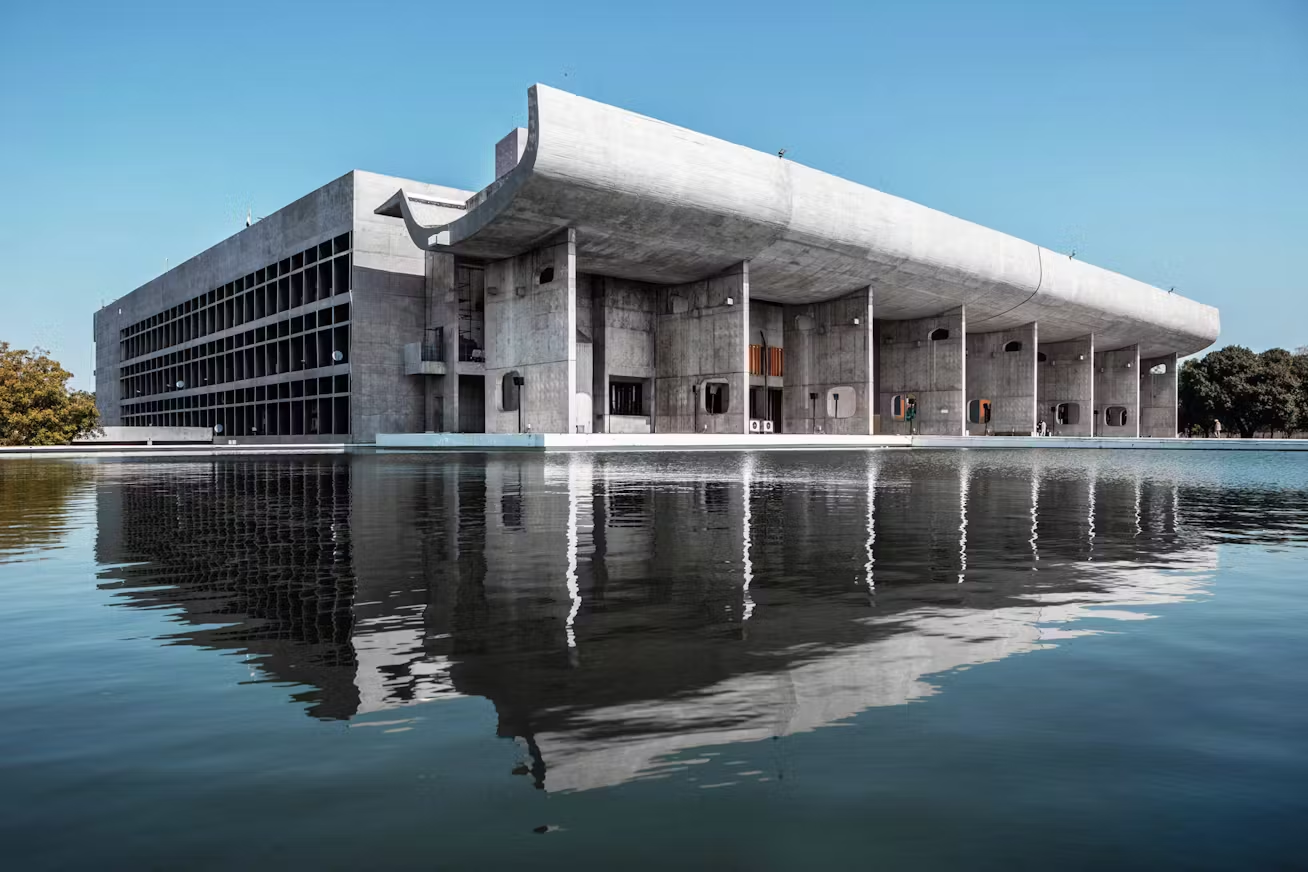
Chandigarh, India’s first planned city post-independence, owes its design to the Swiss-French architect Le Corbusier. The Le Corbusier Centre, located in his former office, preserves his legacy through a collection of sketches, models, and writings. Visitors can delve into the visionary’s approach to urban planning and his contributions to modern architecture in India.
4. National Institute of Design (NID) Museum, Ahmedabad
The National Institute of Design in Ahmedabad is a premier institution for design education in India. Its museum showcases the journey of design in the country, featuring works from students and renowned designers. The exhibits highlight the fusion of traditional crafts with contemporary design, reflecting India’s diverse cultural heritage.
5. Sanskar Kendra, Ahmedabad

Designed by Le Corbusier, Sanskar Kendra is a city museum that encapsulates Ahmedabad’s history, culture, and architecture. The building itself is an architectural marvel, featuring pilotis, a flat roof, and an open floor plan. Inside, visitors can explore exhibits on the city’s textile industry, folk art, and historical artifacts.
6. Jawahar Kala Kendra, Jaipur


Conceived by architect Charles Correa, Jawahar Kala Kendra is a multi-arts center in Jaipur that embodies the cosmic principles of Indian architecture. The design is based on the Navagraha (nine planets), with each section representing a celestial body. The center hosts art exhibitions, workshops, and cultural performances, serving as a vibrant space for artistic expression.
7. DakshinaChitra, Chennai

DakshinaChitra is a living-history museum that offers a glimpse into the traditional homes and lifestyles of South India. The museum features relocated and reconstructed houses from Tamil Nadu, Kerala, Karnataka, and Andhra Pradesh, each showcasing regional architectural styles. Visitors can engage with artisans, participate in workshops, and immerse themselves in the cultural tapestry of the region.
8. Amdavad ni Gufa, Ahmedabad

A collaboration between artist M.F. Husain and architect B.V. Doshi, Amdavad ni Gufa is an underground art gallery that challenges conventional architectural norms. The structure features undulating walls and domes, creating a cave-like ambiance. Inside, Husain’s vibrant paintings adorn the walls, offering a unique fusion of art and architecture.
9. Museum of Art & Photography (MAP), Bengaluru

MAP in Bengaluru is a contemporary museum that aims to bridge the gap between art and the public. The building’s minimalist design complements its extensive collection of artworks, photographs, textiles, and design objects. With interactive exhibits and educational programs, MAP serves as a dynamic space for cultural engagement.
10. Chandigarh Architecture Museum

Situated in the heart of Chandigarh, the Architecture Museum chronicles the city’s planning and development. The museum houses original drawings, models, and documents related to the city’s design, offering insights into the collaborative efforts of architects and planners who shaped this modernist city.
11. Smritivan Earthquake Memorial Museum, Bhuj – Gujarat

Designed as part of a larger memorial complex atop Bhujiyo Dungar, this museum pays homage to the victims of the 2001 Gujarat earthquake. It blends earth-integrated architecture with landscape design, creating a harmonious relationship between built form and topography. The museum is divided into thematic galleries—Rescue, Rebuild, Rediscover—that use storytelling, simulations, and immersive AV tech to engage visitors. The architecture reflects resilience, with low-profile structures embedded into the hill, symbolizing both memory and regeneration.
12. Indian Museum, Kolkata – West Bengal

Founded in 1814, this is India’s oldest museum and one of the most iconic neoclassical buildings in the country. The architecture features a grand colonnaded façade, large courtyards, and classical pediments—evoking British colonial influence. Inside, it houses architectural relics, Buddhist stupas, and sculptures, making it a historic site for studying early Indian architecture and archaeology. The symmetrical planning and axial layout mirror European ideals of order and permanence, reflecting the colonial agenda of “civilizing” through architecture.
13. Indian Music Experience Museum, Bangalore – Karnataka
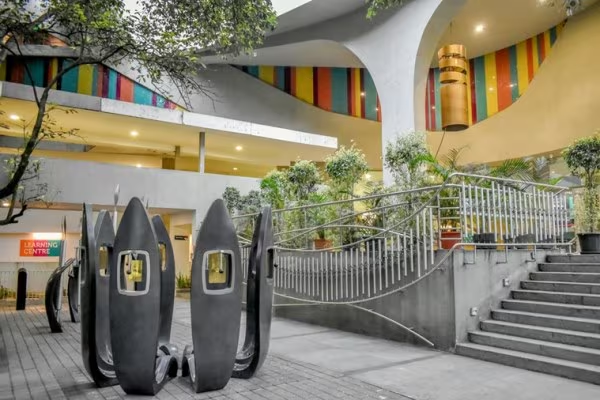
India’s first interactive music museum, IME is as much about spatial experience as it is about sound. Designed with a modern glass-and-steel palette, the museum is organized as a journey through India’s musical heritage, from folk to classical to Bollywood. Its architecture facilitates interaction, flow, and acoustic performance—blending content and container seamlessly. The building plays with transparency, layering, and light, echoing the immersive quality of music itself.
14. Chhatrapati Shivaji Maharaj Vastu Sangrahalaya (CSMVS), Mumbai – Maharashtra

Formerly the Prince of Wales Museum, this structure is a prime example of Indo-Saracenic revivalist architecture. Designed by George Wittet, it blends Mughal, Maratha, and Jain elements with Gothic features like domes, arches, and finials. The museum’s plan revolves around a central dome and radiating galleries, inviting comparison with Mughal-era tombs. Rich stonework, scalloped arches, and stained-glass windows make this a living textbook of colonial Indian architecture.
15. Dr. Bhau Daji Lad Museum, Mumbai – Maharashtra

Architectural Insight: Mumbai’s oldest museum (est. 1855) was originally the Victoria and Albert Museum. It underwent a meticulous restoration, bringing back its Italian Renaissance-inspired interiors with cast iron columns, gold leaf ceilings, and hand-painted floral motifs. Architecturally, it’s a fusion of industrial Victorian form and Indian ornamentation.
Design Note: The museum building is a reminder of how 19th-century industrial materials like cast iron and glass were used decoratively in public architecture.
16. Museum of Socialism, Lucknow – Uttar Pradesh

With its bold use of red sandstone and fortress-like layout, this museum represents political ideology through form. Built under the Samajwadi Party government, the structure evokes civic permanence and power. The heavy, symmetrical geometry and long processional paths reflect the visual language of socialist architecture worldwide. Think of it as India’s version of Brutalism meets Indian monumentality, where architecture becomes a statement of collective identity.
17. Virasat-e-Khalsa, Anandpur Sahib – Punjab

Designed by globally renowned architect Moshe Safdie, this museum is both an architectural icon and spiritual experience. Spread across two complexes, it uses local stone, reflective pools, and sky-lit pavilions to narrate 500 years of Sikh history. The curved, lotus-like forms rise dramatically from the foothills, merging with their surroundings. The structure is monumental yet poetic, using water, light, and geometry to symbolize divine wisdom and unity.
18. Bihar Museum, Patna – Bihar

A masterclass in contemporary museum architecture, Bihar Museum is designed by Maki and Associates (Japan) with OPOLIS Architects (India). The structure uses Corten steel, exposed concrete, and terracotta to connect the ancient with the modern. Spatial zoning leads visitors through thematic pavilions, open courtyards, and shaded walkways. With its rusted steel façade and fragmented form, the building evokes archaeological excavation sites, symbolizing Bihar’s layered history.
A Cultural Itinerary for Architecture Lovers
From vernacular reconstructions to cutting-edge institutions, these architecture museums and centers reflect how India engages with architecture not just as a profession, but as a living, evolving culture. Whether you’re mapping a research trip or seeking weekend inspiration, these places offer knowledge, experience, and visual richness in every corridor.


